Some hazards you can't see, hear, or smell. So we built a sense for them.
- 2026
- Figma
My contribution
Contributed across the concept, interface design, and prototype, with a primary focus on the presentation, developed collaboratively with a teammate.
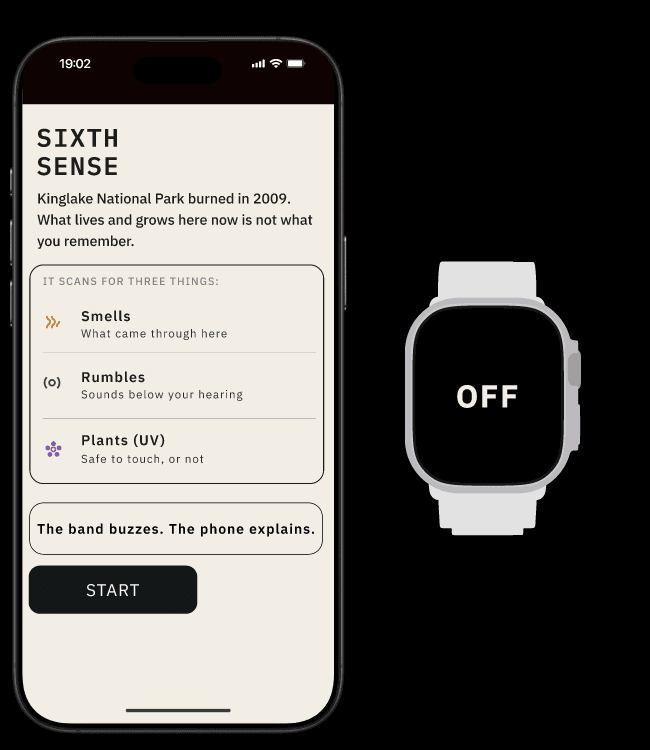
The problem
After a bushfire, a national park is full of hazards a visitor can't see, hear, or smell.
What it does
A Figma interaction prototype pairing a wristband with a companion app for a fictional, post-bushfire Kinglake National Park. Three channels (smells, low-frequency rumbles and plants) turn environmental signals into a vibration on the wrist and an explanation on the phone.
Where it got to
Built for the CISSA Product-Thon 2026.
Design decisions
The band interrupts; the phone explains
The wristband provides the immediate cue without requiring the visitor to keep looking at a screen. The companion app carries the detail: what was detected, where it is, and what action to take.
Calibrate before the walk
The setup offers five vibration strengths and asks the wearer to confirm they can feel the signal. It introduces the three short directional buzzes before the main dashboard.
Make urgency readable
The dashboard puts current warnings ahead of earlier observations. Plain-language messages such as ‘A tree is about to fall’ sit alongside distance, direction and an explicit action, while icons and labels distinguish the sensing channels.
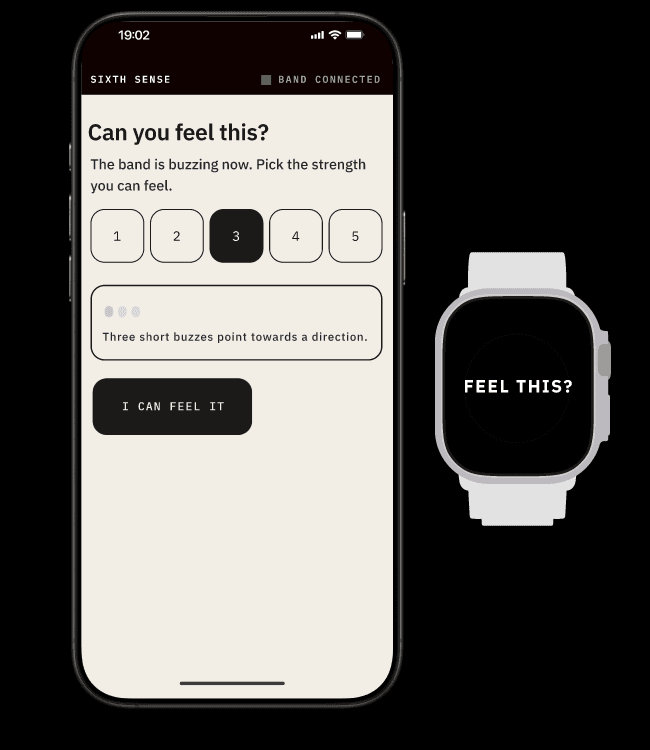 Screen 02
Vibration calibration lets the wearer choose a strength they can feel before continuing.
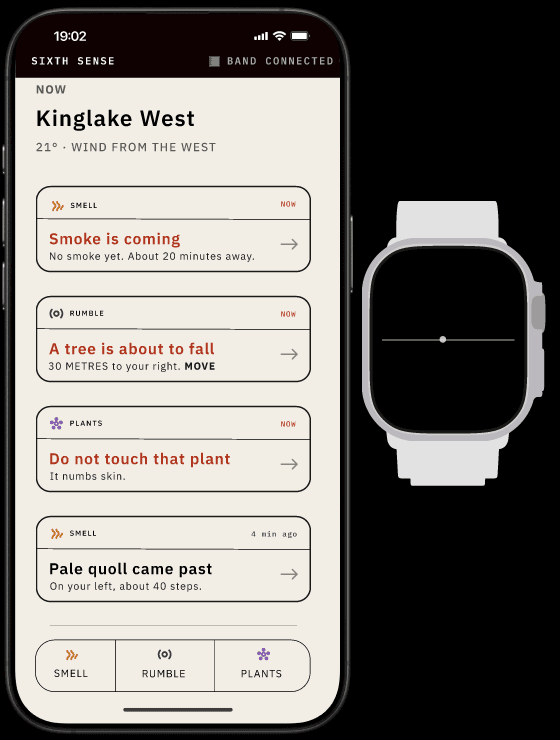 Screen 03
The Kinglake West dashboard separates current hazards from earlier observations, with matching wristband feedback.